
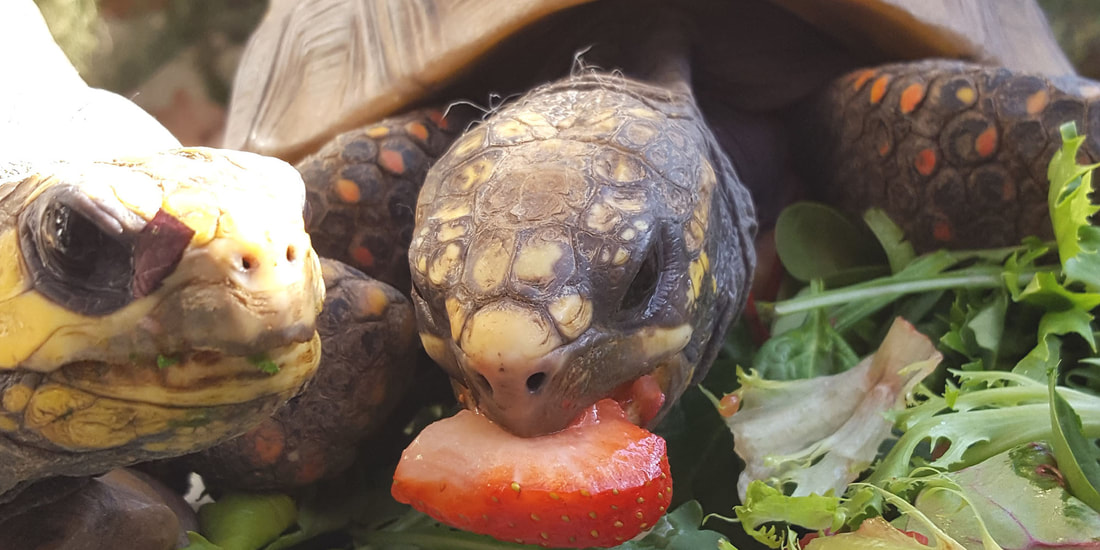
 Most of you are seeing your turtles and tortoises become less active and reducing their food intake as the weather gets cooler. All of ours do this in the sanctuary, pond and turtle hospital. Hibernation is slowing them down, as food bills get smaller. If you have turtles in a tank, even they are feeling sleepy, and should be allowed to hibernate in their tanks as well.
If your turtles live outside all year, you need to provide a suitable place so they are safe from predators. Best to leave them outside in a safe, dry shelter if that’s where they live anyway. If you cannot provide a safe outdoor area, they can be moved to the house, in a cold room. Put them in a tall box with a lid, safe from curious pets like dogs and cats (and small kids). The garage temperature and moisture is ideal, but make sure there are no rats or other creatures that can harm your turtles or tortoises. Some like to go under the bed to snooze while others like your shower. Turtles and tortoises from tropical climates do not hibernate, as there is no need to do so. That’s fine in their country of origin, but you need to provide additional care, food and warmth throughout the winter. Some will slow down, but best to continue their normal care and feeding. Leave them outside in heated houses (we use Kane Heat Pads for safety as heat lamps can catch fire). We add doors to the shelter for warmth. It is important to note that even turtles and tortoises that do not hibernate may need to be kept indoors during the winter months, especially in climates with very cold temperatures. If you choose to keep your turtle or tortoise indoors, be sure to provide them with a warm and humid environment. Hard to do this with a 100 pound sulcata! Turtles in ponds hibernate underwater as mine do. The same turtles that I have had for 25 years, still do this every fall. They even survived the fire underwater as they were hibernating when we lost our home. A turtle friend of mine in New York said her pond had five feet of rock hard ice, but when spring came, the turtles were all fine! They are truly amazing! Some popular tortoises that do not hibernate include:
Thanks for reading this, and send questions to info@tortoise.com! |
Please post an email with your comment or email info@tortoise.com if you want a personal answer for a blog question! Archives
November 2023
Categories
All
|
 RSS Feed